Our group develops radio instrumentation and conducts astronomical observations to study the evolution of the early Universe and the first stars and galaxies. We also apply our technical experience in large data analysis to study new approaches for helping improve science learning and public outreach. Below we showcase some of the projects we are involved in.
Science and Technolgy

ECHO
The External Calibrator for Hydrogen Observatories is a drone mounted calibration source which enables precision measurements with 21cm radio instruments.

EDGES
The Experiment to Detect the Global EoR Signature is collaboration between scientists and engineers at ASU, MIT Haystack Observatory, and CSIRO. It enables high-precision measurements of the smoothness of the all-sky radio spectrum between 50 and 200 MHz (6<z<30), placing limits on the global 21 cm contribution to the all-sky spectrum. This approach may yield powerful tests of the radiative histories of the first luminous sources.
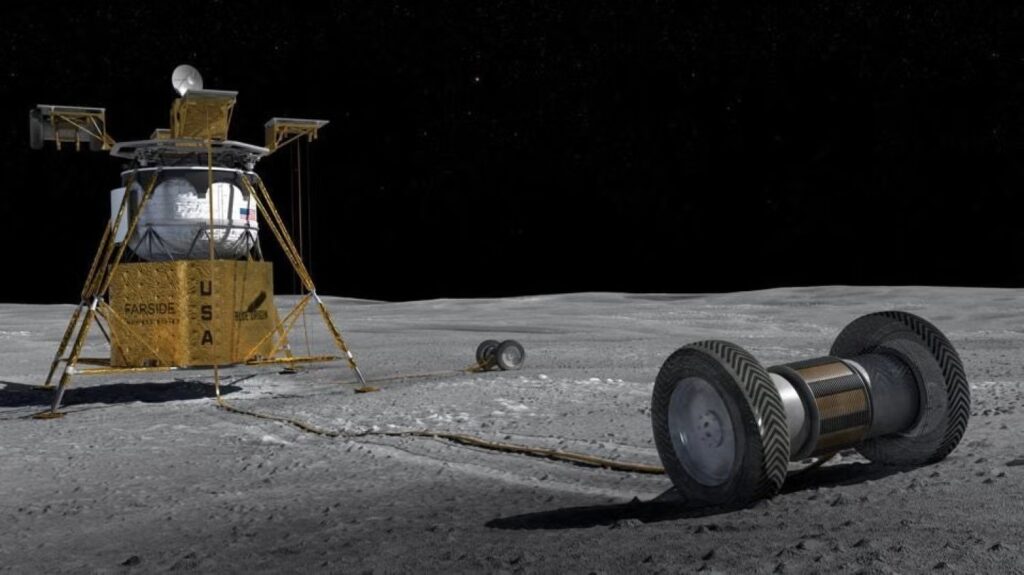
FARSIDE and FARVIEW
The farside of the Moon is the best location for very low-frequency radio astronomy in the inner Solar System because the Moon blocks strong human-made transmitters on the Earth. We are working with teams of national and international collaborators to develop radio telescope designs and technology to enable unique new probes of cosmology and exoplanet habitability.
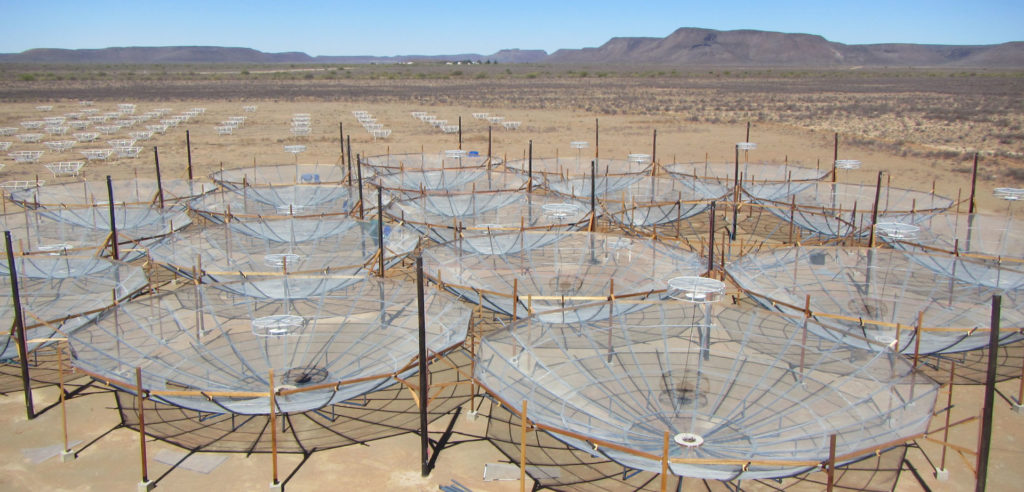
HERA
The Hydrogen Epoch of Reionization Array is the premier low-frequency radio telescope designed to enable the first detection of the redshifted 21cm power spectrum from the epoch of reionization. It was developed by a consortium of universities in the U.S., U.K., and South Africa. The telescope is located in the Karoo Desert of South Africa.

Long Wavelength Array – Meteor Crater
Arizona State University is developing the Long Wavelength Array – Meteor Crater (LWA-MC) radio telescope research station just north of Meteor Crater, about 30 miles east of Flagstaff, Arizona. The telescope will consist of 64 tent-shaped antennas whose signals are combined digitally in computers to map the sky.
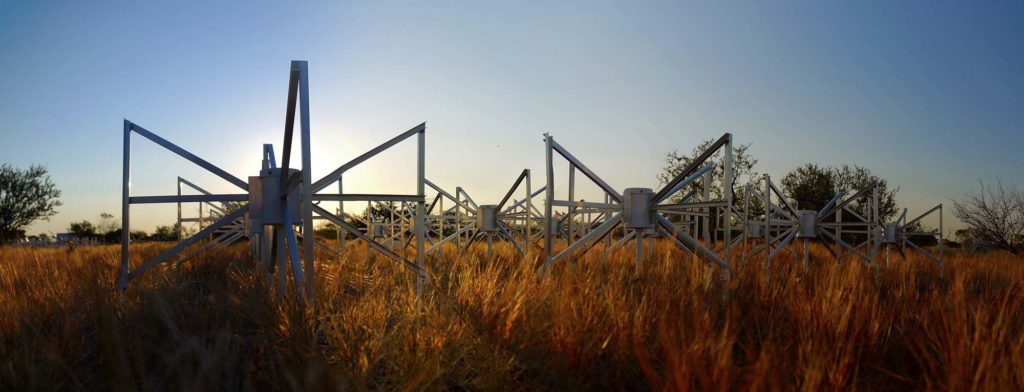
MWA
The Murchison Widefield Array (MWA) aims to characterize spatial fluctuations in the redshifted 21 cm HI emission from the cosmological epoch of reionization through CMB-style statistical measurements of the fluctuation power spectrum and other diagnostics. It is also conducting a large survey of the southern sky for astronomical radio transient sources and investigate the heliosphere through scintillation and Faraday rotation effects to improve the prediction of space weather.
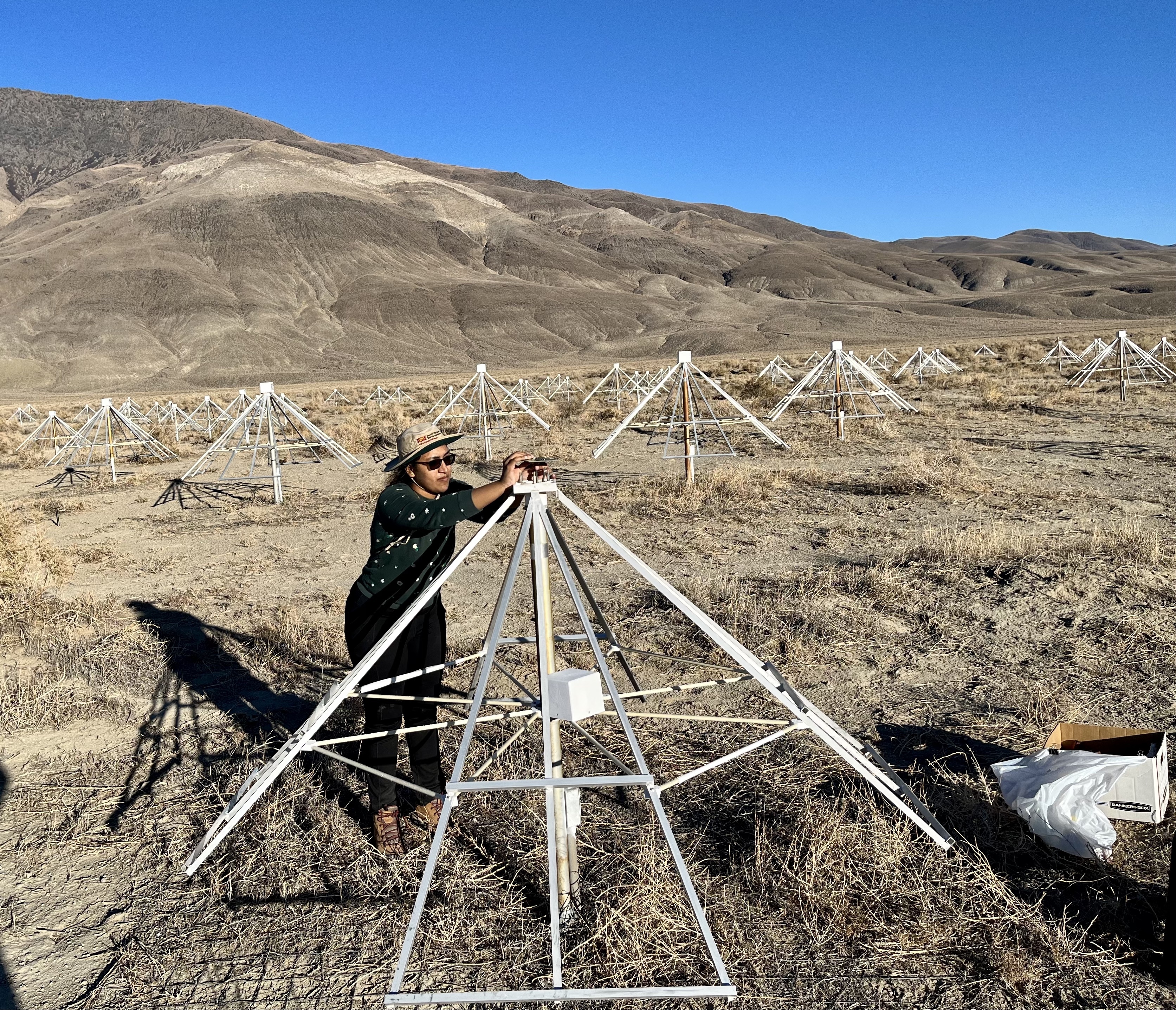
OVRO-LWA
Owens Valley Radio Observatory-Long Wavelength Array (OVRO-LWA) in California aims to study the high redshift HI as a probe of the Epoch of Reionization and fast-cadence all-sky imaging for the detection of low-frequency transients, such as coherent radio emission from exoplanets and compact object merger events.
SPARCS
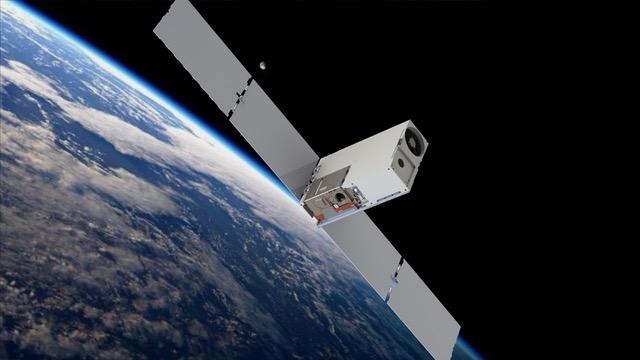
The Star-Planet Activity Research CubeSat (SPARCS) is a 6U cubesat under development to perform long-term monitoring of M-dwarf stars in ultraviolet. SPARCS observations will be used to derive statistical models of M-dwarf stellar flares in order to understand the affects of these active stars on potentially habitable planets in their systems.
Software
ASU Cubesat Software – A collection of repositories supporting various cubesat projects. CCSDS Space Packet Crate (spacepacket) implements space packet, telecommand (TC) frames, and telemetry (TM) frames encoding and decoding with with CRC and Sink/Stream support in Rust. CCSDS File Delivery Protocol (cfdp-rs) is a cross-platform, open source Rust implementation of the CCSDS File Delivery Protocol (CFDP). The collection also includes the sparcs-uboot implementation that modifies the standard KubOS uboot configuration to include support for independent dual disk support on the Pumpkin MBM2 motherboard.
EDGES Collaboration Software (edges-collab) – The edges-collab tools include several repositories providing functionality in Python to access and process data from the global 21cm experiment and include a general purpose GSData class suitable for interoperable exchange of data between instruments. They also include the FASTSPEC CPU-based real-time digital sampler and polyphase filter bank channelizer implemented in C++.
E-field Parallel Imaging Correlator (EPIC) – Based on the MOFF algorithm, EPIC is the first generic implementation of a direct imaging correlator for dense, large-N radio arrays. It is operational on the LWA-SV radio telescope in New Mexico.
Precision Radio Interferometer Simulator (PRISim) – PRISM provides accurate, widefield visibility and delay spectra simulations for low-frequency arrays, including MWA and HERA.
Radio Astronomy Software Group (RASG) – Our team supports this community effort to develop tools for precision radio astronomy, including file I/O and data handling, simulations, and catalog management.
Concluded Projects
Ask Dr. Discovery – Ask Dr. Discovery was a partnership between ASU, the Arizona Science Center, and the Arizona Museum of Natural History that investigated how to use familiar technology, including smartphones and tablets, to address the immediate and pressing challenge of affordable, ongoing, large-scale museum evaluation while encouraging visitors to explore and engage deeply with museum content in astronomy, space science, and natural history.
DARE – The Dark Ages Radio Explorer (DARE) was an Explorer mission concept that would take advantage of the pristine radio environment behind the farside of the Moon to probe the global 21 cm spectrum. The mission concept was motivated by research performed as part of the Lunar University Network for Astrophysics Research (LUNAR), a collaboration between many institutions to investigate opportunities for new astrophysical measurements from the lunar surface or orbit.
DORA Cubesat – The Deployable Optical Receiver Aperture for Lunar Communications and Navigation is a collaboration between ASU and Jet Propulsion Laboratory (JPL). The technology development objective is to build a cubesat demonstration of a wide-field laser terminal that provides a sustained 1 Gbps data rate over 1000 km, while requiring only 10 degree spacecraft bus pointing accuracy and stability.
LUNAR and NESS – LoCo researchers have been members of two national teams — the Lunar University Network for Astrophysics and the Network for Exploration and Space Science — formed under NASA’s Solar System Exploration Research Virtual Institute (SSERVI) and led by the University of Colorado. These virtual institute teams studied how astrophysics and heliophysics are enabled through human and robotic exploration of the Solar System, particularly on the Moon.
Phoenix Cubesat – Phoenix was ASU’s first fully student-led cubesat project to be developed by the university. On November 2, 2019, it became ASU’s first cubesat to be launched and later was successfully deployed from the International Space Station in February 2020. In the fall of 2015, the student team submitted a proposal to NASA USIP to develop Phoenix to study urban heat islands with infrared imaging. From summer 2016 to August 2019, Phoenix gave about 80 students pursuing science and engineering the opportunity to learn about spacecraft development, interdisciplinary communication, project management, and how to develop a scientific objective from the ground up.